August 1961
The Wall Goes Up
After the construction of the [Berlin Wall](entity:location-recall-location-e9edf8303559) began, Le Carré's narrative recalls the shock of its sudden emergence, as well as the helplessness of people in the divided city. At the Checkpoint Charlie, American and Soviet tanks faced each other across the road, while both sides' intelligence networks found themselves
October, before Leamas returns to London
The Failed Crossing
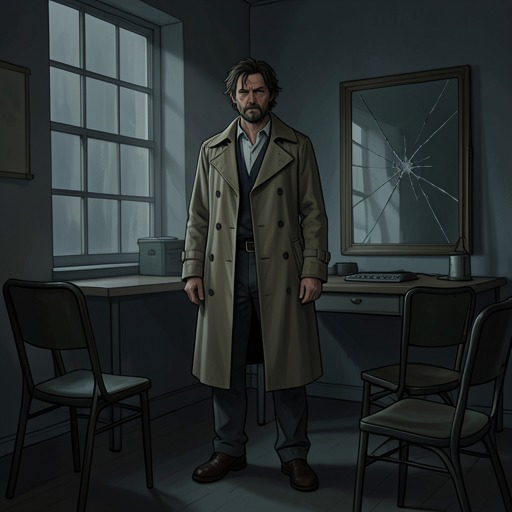
At the crossing point, [Alec Leamas](entity:character-recall-character-alec-leamas-fa2476d870dd) waits through the dusk for Karl Riemeck, an East German agent trying to escape. A woman arrives instead, explaining that the authorities have come for Karl and that he fled by bicycle; Leamas learns that other members of his network have already been caught.
Karl eventually reaches the Western checkpoint, but searchlights and a siren expose him as he pedals toward safety. An East German sentry shoots him before he reaches the boundary. Leamas watches, hoping Karl is dead rather than left to suffer, and the network’s last great source is lost.
Immediately after Karl’s shooting
The Network Is Lost
On the flight out of [Berlin](entity:location-recall-location-berlin-54cb4a75d0f6), Leamas recognizes that he has been defeated. His agents have been killed, arrested, or compromised, and he believes Hans-Dieter Mundt has systematically destroyed the network he spent years building.
The loss is not merely professional. Leamas is an operational officer who has resisted the desk-bound life awaiting him at headquarters; with Karl dead, his work and his purpose appear to have ended together.
After Leamas returns to London
Control’s New Proposal
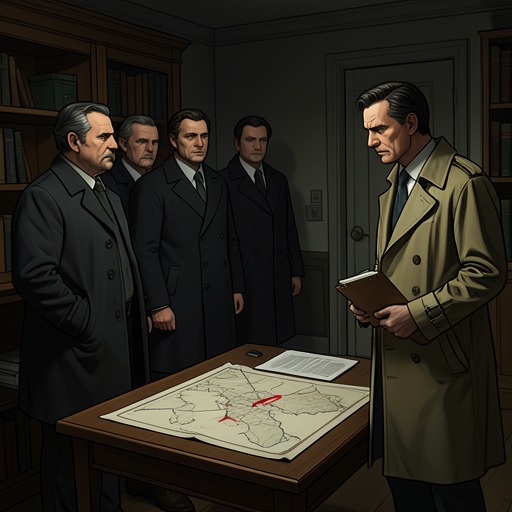
At [The Circus](entity:organization-recall-organization-the-circus-4904964b7ae7), [Control](entity:character-recall-character-control-7a412d75586b) questions Leamas about Karl’s death and the series of agents lost in East Germany. He asks whether Leamas is burned out, then argues that the service’s work is defensive even when its methods resemble those of its enemies.
Control says [British Intelligence](entity:organization-recall-organization-british-intellig-fc67921ed541) must discredit Mundt and asks Leamas to stay in the cold a little longer. Leamas agrees to help remove Mundt, while Control promises that the assignment will be his last and offers him the money he can make from it.
The following months
The Official Decline
Leamas is put on the shelf and assigned to Banking, where the work is routine and his prospects are poor. In front of his colleagues he deteriorates rapidly, drinking heavily, neglecting his appearance, borrowing small sums, and becoming bitter about the service and its administration.
Rumours spread that he stole money from the accounts and that his pension has been compromised. The service allows the story to take hold, making his collapse look like a disgraced officer’s genuine ruin and preparing the ground for a convincing approach by foreign intelligence.
After leaving the Circus
A Job at the Library
Short of money, Leamas tries unsuitable work before accepting a position at the Bayswater Library for Psychic Research. There he meets [Liz Gold](entity:character-recall-character-liz-gold-f76f696a9567), a young librarian and member of the [British Communist Party](entity:organization-recall-organization-728621776bd9). Their days are spent sorting and checking books under the fussy supervision of Miss Crail.
Liz offers Leamas companionship without demanding explanations. He remains guarded and cynical, but her steady kindness begins to draw him into an ordinary life he has long kept at a distance.
About three weeks after Leamas starts at the library
The First Supper
Liz invites Leamas to supper at her small flat. He returns when she asks and gradually becomes a familiar presence there, while she senses that something in his life may soon take him away again.
When she asks what he believes in, he rejects talk of God, ideals, and the meaning of life. Liz admits that she believes in history, and Leamas realizes she is a Communist. They become lovers that night, but he leaves before dawn, ashamed and already emotionally withdrawn.
About a week later
Leamas Falls Ill
Leamas stops coming to the library. Liz, worried when he does not appear, goes to his flat and finds him feverish, weak, and unable to answer the door. With the help of a grocer, she gets inside and stays to care for him.
For six days she brings food, tends to him, and shares his bed. Her care gives Leamas a glimpse of the small loyalties and ordinary tenderness he has missed, but the intimacy also makes the imminent break between them more painful.
The Friday evening before the assault
The Last Goodbye
Leamas, now dressed and preparing to leave, eats supper with Liz. He has sold possessions from the flat and seems more distant than usual. When Liz asks if this is goodbye, he kisses her and tells her not to follow him again.
He gives no real explanation, only leaving her with the belief that his departure is final. The scene is a deliberate severing of their relationship before the public act that will send him to prison and draw attention to his supposed desperation.
The Saturday after Leamas’s farewell
The Grocer’s Assault
Leamas asks the grocer for credit and is refused. He erupts, strikes the man with swift, controlled blows, and leaves him badly injured while the shop’s customers look on.
The assault is not an impulsive accident but the next stage of Leamas’s manufactured collapse. A public, apparently irrational attack gives the police and the East German service a story to notice, while the resulting arrest makes his poverty and resentment seem real.
The three months after the assault
Prison and the Parcel
Leamas is sentenced to prison. He keeps to himself, refuses to join the other prisoners’ social rituals, and endures the claustrophobia of the cell and the humiliations of confinement. After a brief illness, he emerges with a brown paper parcel containing his few possessions.
On release, he abandons the parcel on a park bench, hoping to discard the last remains of his old life. A stranger follows him with it and claims to recognize him from [Berlin](entity:location-recall-location-berlin-54cb4a75d0f6), beginning the contact that the Circus has arranged.
The day Leamas leaves prison
Ashe Makes Contact
The stranger introduces himself as [William Ashe](entity:character-recall-character-william-ashe-18decc099bbe) and says he owes Leamas money from their supposed [Berlin](entity:location-recall-location-berlin-54cb4a75d0f6) acquaintance. Leamas recognizes the story as a cover but plays along, testing Ashe’s persistence through lunch and pointed sarcasm.
Ashe presents himself as a struggling journalist and offers Leamas a place to stay and access to work. Leamas understands that this is an intelligence approach: Ashe is trying to discover whether the disgraced former officer can be recruited or induced to sell information.
That evening
A Place at Dolphin Square
Ashe invites Leamas to stay at his flat in Dolphin Square and arranges a meeting with [Sam Kiever](entity:character-recall-character-sam-kiever-29db040d63af), his employer. Once Ashe leaves, Leamas reports the contact to [Control](entity:character-recall-character-control-7a412d75586b) through a prearranged channel, then returns to the flat to keep playing the part of a man without money or prospects.
Kiever arrives and joins them for dinner. Leamas lets the two men see his resentment of the Americans and his financial vulnerability, while watching for signs of the real purpose behind their hospitality.
Later that evening
The Recruitment Offer
At a club in Wardour Street, Leamas confronts Ashe over the false name on his membership card and the suspicious arrangements surrounding the flat. Kiever dismisses Ashe and tells Leamas plainly that he wants to make a journalistic proposition.
Kiever offers a large payment for intelligence about British operations, with additional money for continued access. Leamas pretends to weigh the offer as a desperate man would, then accepts a meeting abroad. Kiever supplies a passport and arranges travel to the [Netherlands](entity:location-recall-location-a89070caa9e5).
The next morning
Arrival at Le Mirage
Kiever and Leamas fly to The Hague and are driven to a guesthouse called [Le Mirage](entity:location-recall-location-le-mirage-85750dbb4371) near the dunes. A woman welcomes them with conspicuous warmth, and Leamas notices that a man in a raincoat seems to have followed their route.
[Peters](entity:character-recall-character-peters-73761f52589c) arrives and takes over from Kiever. Leamas recognizes the professional shift: the intermediary has delivered him to a more senior interrogator. He rejects false intimacy and insists they deal with one another as professionals.
The first days at Le Mirage
The First Interrogation
[Peters](entity:character-recall-character-peters-73761f52589c) questions Leamas about his wartime service, his return to the Circus, and his operational career in [Berlin](entity:location-recall-location-berlin-54cb4a75d0f6). Leamas recounts his work with networks and his role in recruiting Karl Riemeck, then describes the loss of agents and the collapse of the Berlin operation.
Peters repeatedly questions whether Riemeck could have obtained so much sensitive material alone. Leamas insists that he did, but the interrogator’s skepticism echoes questions [Control](entity:character-recall-character-control-7a412d75586b) had asked him, suggesting that both services know there may have been a hidden collaborator.
During the first interrogation
Riemeck’s Network Exposed
Leamas gives [Peters](entity:character-recall-character-peters-73761f52589c) details of Riemeck’s access to the East German leadership and security apparatus, the secret material he photographed, and the agents recruited around him. He explains that [London](entity:location-recall-location-1bfd335cdd1b) took over the case after the initial success, pressed for more sources, and thereby increased the danger to Riemeck.
Peters tells Leamas that Elvira, Riemeck’s mistress, has been murdered in [West Berlin](entity:location-recall-location-99956a907eea). Leamas is shaken but hides his reaction, while his growing suspicion that Riemeck had a powerful accomplice becomes part of the intended trail toward Mundt.
The second day at Le Mirage
Rolling Stone Payments
[Peters](entity:character-recall-character-peters-73761f52589c) turns the interrogation to Leamas’s period in Banking Section. Leamas recalls a highly restricted operation called Rolling Stone, in which he deposited large sums in [Copenhagen](entity:location-recall-location-8418dcb09a35) and [Helsinki](entity:location-recall-location-7fe18d3dd404) under false identities, using accounts with a second signatory.
He says the arrangement was unusually elaborate and that he never knew who the intended agent was. He identifies the aliases associated with the accounts and insists that a senior East German source would have been handled through his [Berlin](entity:location-recall-location-berlin-54cb4a75d0f6) command, a claim that gives the planted evidence its central contradiction.
A few days after arrival in the Netherlands
The Hunt Becomes Irreversible
[Peters](entity:character-recall-character-peters-73761f52589c) tells Leamas that British authorities are searching for him on an Official Secrets Act charge and that ports across Western Europe are being watched. Leamas suspects [Control](entity:character-recall-character-control-7a412d75586b) has engineered the pursuit to make escape impossible and drive him into the East.
He considers running under a new identity, but Peters refuses to provide the papers and money. Leamas agrees to travel onward, aware that the choice may make him a permanent prisoner behind the Curtain. At the airport he confirms that his photograph has appeared in the [London](entity:location-recall-location-1bfd335cdd1b) papers.
That evening
Crossing into the GDR
Leamas and [Peters](entity:character-recall-character-peters-73761f52589c) fly to [Berlin](entity:location-recall-location-berlin-54cb4a75d0f6) and cross from the Western sector into East Germany. Leamas notices the strengthened barriers and the escort that shadows their car, while still hoping for a last chance to turn back.
Peters says East German officials want to question him before he travels farther east. Leamas expects [Fiedler](entity:character-recall-character-fiedler-0f6af736284c), the [Abteilung](entity:organization-recall-organization-abteilung-fca5c3718e4d)’s counterintelligence officer, and learns that the interrogation will take place in the countryside. His staged defection has carried him into the heart of the operation.
That night, at the rural lodge
Fiedler Takes Over
At a secluded lodge, Leamas meets [Fiedler](entity:character-recall-character-fiedler-0f6af736284c), a sharp and relentless [Abteilung](entity:organization-recall-organization-abteilung-fca5c3718e4d) interrogator. Fiedler tells him that he will not be taken farther east and that [Peters](entity:character-recall-character-peters-73761f52589c) served only as the Soviet go-between who made the earlier transfer possible.
Leamas erupts at the deception, then learns that Ashe and Kiever have been arrested and that the East Germans had not informed [London](entity:location-recall-location-1bfd335cdd1b) of his capture. Fiedler says he wants the full truth about Leamas’s knowledge, and the questioning shifts from routine intelligence gathering toward the case against Mundt.
The morning after Leamas meets Fiedler
The Rolling Stone Puzzle
[Fiedler](entity:character-recall-character-fiedler-0f6af736284c) argues that Leamas has supplied only one important piece of intelligence: Rolling Stone. He questions the unusual security rules governing the file, who could read it, and how it moved between departments.
Leamas gradually recalls that [Peter Guillam](entity:character-recall-character-peter-guillam-bfb84d04fe08) and [Satellites Four](entity:organization-recall-organization-satellites-four-50884fff6567) were among the authorized readers, and that Guillam had brought the file to Banking. The detail suggests a covert channel beyond Leamas’s knowledge, allowing Fiedler to infer that the payments may have financed a source inside East Germany.
The following afternoon
The Moral Argument
During a walk, [Fiedler](entity:character-recall-character-fiedler-0f6af736284c) presses Leamas on what justifies the work of [British Intelligence](entity:organization-recall-organization-british-intellig-fc67921ed541). Leamas has no coherent doctrine to offer; he says the Circus is made up of ordinary people and admits that opposition to Communism may be all that holds them together.
Fiedler contrasts that vagueness with the [Abteilung](entity:organization-recall-organization-abteilung-fca5c3718e4d)’s explicit commitment to collective necessity, which can justify the sacrifice or elimination of individuals. Their argument exposes the shared moral danger of both services: each can make human lives expendable by claiming that a larger cause requires it.
After Fiedler decides to test the accounts
The Bank Letters
[Fiedler](entity:character-recall-character-fiedler-0f6af736284c) asks Leamas to write to the [Copenhagen](entity:location-recall-location-8418dcb09a35) and [Helsinki](entity:location-recall-location-7fe18d3dd404) banks for current account statements. The letters imply that he has already written and received no reply, creating a paper trail that could expose whether the co-signatories ever withdrew the money.
Leamas signs under his false names, Robert Lang and Stephen Bennett. Fiedler plans to have the replies relayed from Paris, while keeping Leamas close and talking through the everyday details of his work. The inquiry now has a testable link between the supposed payments and a possible East German agent.
During the week awaiting the bank replies
Fiedler’s Suspicion of Mundt
As Leamas and [Fiedler](entity:character-recall-character-fiedler-0f6af736284c) walk and talk, Fiedler explains his growing belief that Mundt has been eliminating agents before they can be interrogated. He recalls that Mundt’s killings of suspected sources make sense if Mundt fears what they might reveal.
Fiedler connects the theory to Mundt’s escape from Britain after [the Fennan case](entity:event-recall-event-06fae9989e11). A remark attributed to Guillam—that British authorities did not want Mundt caught—suggests that Mundt may have been turned by [British Intelligence](entity:organization-recall-organization-british-intellig-fc67921ed541). Leamas loudly rejects the idea, as the operation requires, while Fiedler grows more convinced.
After the Copenhagen bank reply arrives
Mundt’s Danish Visit
[Fiedler](entity:character-recall-character-fiedler-0f6af736284c) tells Leamas that the [Copenhagen](entity:location-recall-location-8418dcb09a35) account was emptied by its co-signatory one week after Leamas deposited the money. The date coincides with a secret visit Mundt made to Denmark, giving Fiedler the circumstantial link he needs.
The timing turns Rolling Stone from a suspicious payment scheme into apparent evidence that Mundt received British money. Leamas is left inside a plot whose success depends on Fiedler drawing the intended conclusion while believing he has reached it independently.
While Leamas and Fiedler await the bank evidence
Liz’s Invitation East
In [London](entity:location-recall-location-1bfd335cdd1b), Liz receives a letter from the [British Communist Party](entity:organization-recall-organization-728621776bd9) inviting her to visit the German Democratic Republic as part of an exchange for local party members. She is surprised by the honour and the haste, but persuades herself that the Party has chosen her as a gesture of reconciliation.
The invitation has been arranged through Ashe’s earlier questions about her work and holidays. Liz accepts without knowing that her relationship with Leamas is being folded into the operation as a possible means of discrediting him.
The first days of Liz’s visit to Leipzig
Liz’s Party Disappointment
Liz stays with Frau Ebert in [Leipzig](entity:location-recall-location-8d916753a217) and takes part in routine Party work: distributing literature, visiting members, and attending meetings. The austerity and shared purpose initially comfort her, but a heavily promoted branch meeting draws only a handful of people.
The small attendance recalls the disillusionment she has felt in her own branch. She sees the distance between grand political language and the modest, often futile labour of ordinary members, yet continues to believe that history and the Party’s ideals can give that work meaning.
The fourth day of Liz’s visit
A Sudden Summons
After the [Leipzig](entity:location-recall-location-8d916753a217) branch meeting, a Party official named Holten arrives and says the [Praesidium](entity:organization-recall-organization-praesidium-ceebc0bc2bf7) has invited Liz to a special gathering. She is told to leave immediately for a destination near the Polish border.
The abrupt change separates Liz from her hosts and places her under the authority of the East German leadership. She has no idea that she is being brought into the same political proceedings that now threaten Leamas and [Fiedler](entity:character-recall-character-fiedler-0f6af736284c).
After the bank evidence strengthens Fiedler’s case
Leamas Is Arrested
Returning to the lodge with Leamas, [Fiedler](entity:character-recall-character-fiedler-0f6af736284c) is approached by men claiming to have come from [Berlin](entity:location-recall-location-berlin-54cb4a75d0f6). While Fiedler goes to meet them, Leamas enters the darkened annexe and realizes that the guards are missing and the house has been prepared for an ambush.
He waits in darkness and strikes one of the intruders when the man stumbles into a chair. The lights come on; Leamas is overpowered and knocked unconscious. When he wakes, he is chained in a cell, accused of killing a guard, and under the control of Mundt’s men.
After the arrest
Mundt Interrogates Leamas
Mont interrogated Li Mas, who was severely injured, and revealed that Fidel was arrested on suspicion of plotting against the state. He said that Li Mas was an important witness in the public investigation and wanted him to admit that the British intelligence agency sent him to frame Mont. Mont saw through the trap
After Leamas collapses under interrogation
Fiedler Returns
Li Masawaka awoke in a hospital ward and found Fidler sitting by the bed. Fidler said he also was beaten, in part because Mont had insulted him with anti-Semitic remarks, and explained that the Central Committee of the German Socialist Unity Party had ordered a secret investigation
The next day
The Tribunal Begins
The next day, a secret review session was held in a narrow, simple room, with attendees being selected officials and members of the Presidium of the German Socialist Unity Party. [Fiedler](entity:character-recall-character-fiedler-0f6af736284c) presented the case against Mont, arguing that the British funds, suspicious movements, and the mysterious removal of agents
During the Tribunal hearing
The Case Against Mundt
During the trial, Fidel claimed that Monte protected Carl Rimeck, allowing him to access security department documents and using national surveillance to connect him with the network of Li Mas. He described Rimeck as the link between Monte and British intelligence agencies, explaining how this apparent agent could possess such comprehensive
Later in the Tribunal hearing
Karden’s Counterattack
After the trial, Montes' representative, Cadan, argued that Li Mas's downfall, the attack, his apparent anti-American stance, and Ash's contact with him were all carefully arranged to mislead the German intelligence agency. He pointed out that British intelligence may have fabricated clues about bank transactions
During the Tribunal hearing
Liz Takes the Stand
During the trial, Lizzie was brought into the court and questioned about her relationship with Li Ma, his poor situation, and the money that appeared after his arrest. She did not understand the purpose of these questions and only wanted to protect Li Ma, so she admitted that someone had anonymously given gifts
Immediately after Liz’s testimony
Leamas Confesses
After Liz testified, Li Mas demanded her release, then admitted that the operation against Monte was planned by [London](entity:location-recall-location-1bfd335cdd1b). He explained that the circus arranged his downfall, spread rumors, and set up recruitment contacts so that East Germans would believe he had brought important intelligence when he fled
At the close of Leamas’s confession
The Tribunal Turns on Fiedler
When Li Ma Stan Bai confessed, Fidel realized that the entire operation was designed around his own suspicions, and the money given to Lize had already damaged the case. He sent Lize away, saying she could not reveal something she did not know. Li Ma Stan Bai's confession allowed the secret
After the Tribunal adjourns
Liz Is Held
After the secret review committee adjourned, Liza waited in the prison office. The female guard explained the regime's views on enemies, intellectuals, and the suppression of individualism. She learned that Li Mas and [Fiedler](entity:character-recall-character-fiedler-0f6af736284c) might be executed, and that the party viewed their supposed conspiracy as the
Later that night
Mundt Releases Them
Later that evening, Monte came to Lizzie's cell and led her through the prison corridor to the side door. Outside, Limas was waiting by a car. Monte said that Lizzie and [Fiedler](entity:character-recall-character-fiedler-0f6af736284c) were worthless, and then let them go. Limas asked Lizzie to get into the
On the drive toward Berlin
The Double Agent Revealed
While driving toward [Berlin](entity:location-recall-location-berlin-54cb4a75d0f6), Li Ma Si told Liza that Monte was a British agent, recruited in [London](entity:location-recall-location-1bfd335cdd1b). This operation was originally intended to protect Monte from the threat of [Fiedler](entity:character-recall-character-fiedler-0f6af736284c), as Fiedler's investigation might expose his double life; Li Ma Si was sent to make Fiedler
During the drive to the Wall
The Cost of the Operation
While driving toward the [Berlin Wall](entity:location-recall-location-e9edf8303559), Lee Mas explained how the circus used him and Liz as action materials, pointing out that the methods used by the intelligence agencies were part of a close-range war. He admitted the operation was despicable, yet insisted that the criteria for intelligence work were based on results and
Near one o’clock, approaching Berlin
The Escape Plan
About one a.m., the contact drove Li Mas and Liz through the dark streets, heading toward the [Berlin Wall](entity:location-recall-location-e9edf8303559). He explained that a searchlight would briefly move away from a pre-selected section of the wall, giving them ninety seconds to cross over before the guards would realize. The contact refused to give
Around 1:05 a.m.
The Final Climb
About 1:05 a.m., the searchlights shifted elsewhere. Li Mas reached the [Berlin Wall](entity:location-recall-location-e9edf8303559) and climbed the metal steps. He pushed through the severed barbed wire, reached out and pulled Liz up, holding her. At the same time, someone on the west side shouted for him to
Moments after Liz is shot
Death at the Wall
After Liz was shot, a man in the west yelled for Li Mas to jump over. Smyth also shouted asking where Liz was. Li Mas looked down and saw that she was already dead. He did not crawl over the wall to a safe place, but instead crawled down to her side and stood